What is Pelvic Floor Dysfunction?

Pelvic floor dysfunction is not being able to completely relax and coordinate your pelvic floor and abdominal muscles to pee or poop.
By supporting your rectum, uterus, bladder, bowels, and urethra, your pelvic floor muscles form a core part of many bodily functions. But what happens when the tissues and ligaments of this muscle group become too tight? Read on as we share more about pelvic floor dysfunction.
Symptoms of Pelvic Floor Dysfunction
Frequent Bathroom Visits
Bladder Leakage /Urinary Incontinence
Let Poise® help support your bladder with a range of incontinence products to help you feel dry all day long. Don’t let bladder leakage slow you down.
Pain when urinating, lower back pain, pain in your pelvic region, genitals, or rectum
Bowel Movement Issues
Such as needing to strain or push to have a bowel movement, constipation, or leaking stool/fecal incontinence.
What Causes Pelvic Floor Dysfunction?
It is not known what the cause is of pelvic floor dysfunction. Various factors can be responsible for the weakening of your pelvic floor muscles. This can include the following:
Injury to Pelvic Area
Pregnancy and childbirth
Stress and anxiety
Aging
Straining when having a bowel movement
Connective tissue disorders
Pelvic surgery, such as a hysterectomy
Treating Pelvic Floor Dysfunction
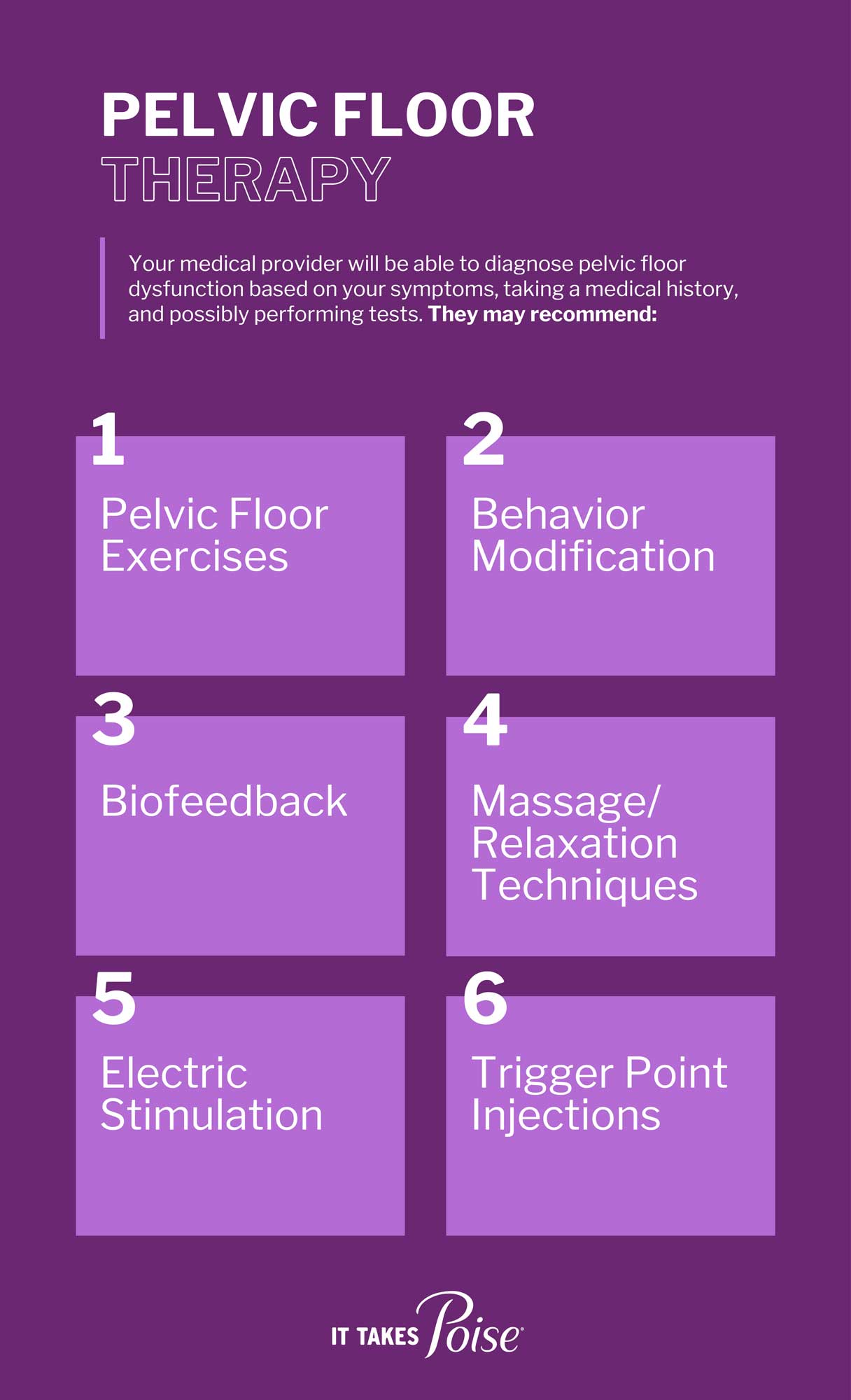
Pelvic Floor Dysfunction will not go away on its own. You should discuss with your medical provider. They will be able to diagnose pelvic floor dysfunction based on your symptoms, taking a medical history, and possibly performing some tests. They may recommend:
Pelvic Floor Therapy
Pelvic floor exercises such as Kegels can help strengthen your pelvic floor muscles.
Biofeedback: A method during which your physical therapist will place electrode sensors on your lower abdomen and in your anus (if necessary) to monitor you and make sure you’re engaging the right muscles.
Behavior modification
Medications
Massage/Relaxation techniques
Electric stimulation: This is used to help desensitize the nerves that cause your muscles to contract and relax.
Trigger point injections
Bladder Leakage Products
Bring yourself peace and confidence by using our bladder support products. Whether you find yourself needing heavier coverage or lighter, Poise® Bladder Leak Pads can help keep you dry and protected.
Available in a range of light-to-heavy absorbencies, these pads will support you day and night, offering up to 12 hours of dryness to ensure that you stay dry and comfortable.
Build Confidence with Your Pelvic Floor with Poise®
Don’t let bladder leakage ruin your day. Take charge and restore your confidence with our range of bladder leakage support products.
Discover information about your pelvic floor and take control of your health with Poise®.
Recommended Resources
https://www.health.com/pelvic-floor-dysfunction-7375007#:~:text=Pelvic%20floor%20dysfunction%20is%20the%20damage%20or%20weakening%20of%20the,pelvic%20floor%20or%20relieve%20symptoms\
https://en-gb.hingehealth.com/resources/articles/stress-trauma-pelvic-pain/
https://allianceurology.com/pelvic-floor-dysfunction-symptoms/
https://my.clevelandclinic.org/health/diseases/14459-pelvic-floor-dysfunction
https://www.medicalnewstoday.com/articles/327511
