What is Menopause? Understanding the Basics and Causes
Beginning in your 30s and 40s, you may begin to have perimenopausal symptoms, which includes a change in your menstrual cycle.
By around age 51 or 52, you may start to have menopause symptoms, a process that marks the end of a women's reproductive cycle. This includes a range of changes that may affect you mentally, emotionally, and/or physically. However, every woman is different. The exact age and symptoms can vary.
To help you navigate this time, we’re sharing information about menopause. As always, please reach out to a medical provider should you have any specific questions related to what you are experiencing.
What is Menopause?
Menopause is a transitional stage for women as the body stops its reproductive cycle. This is marked by when the ovaries are no longer making estrogen and your period ending. In general, once you’ve been period-free for 12 months in a row, you’re officially considered to be in menopause.
What are the Three Stages of Menopause?
Before menopause begins, you’ll experience a range of pre-stages. This is called perimenopause, which leads to menopause and eventually post menopause. Here’s more about each of these stages:
Stages of Perimenopause
This is the earliest stage in your menopause journey, which can begin in your mid-30s until your late 50s (8-10 years before you experience menopause). During this time, estrogen levels are decreasing and you may experience symptoms similar to menopause, which can include hot flashes, irregular periods, low libido, and night sweats.
Stages of Menopause
To be considered out of the perimenopause phase and in menopause, 12 months needs to have passed since your last period and on average at age 51. During this process, your ovaries stop producing reproductive hormones.
During this stage:
- Your body doesn’t produce that much estrogen.
- You may experience symptoms such as irregular periods, night sweats, vaginal dryness, to name a few.
Stages of Post Menopause
Once you’ve hit menopause and your menstrual cycle has stopped, you’ve entered the postmenopausal stage. Everything that comes after your period stops is considered post menopause.
This stage includes:
- The stopping of ovulation
- Some symptoms such as hot flashes and night sweats
- Increased risk of osteoporosis
Common Signs and Symptoms of Menopause
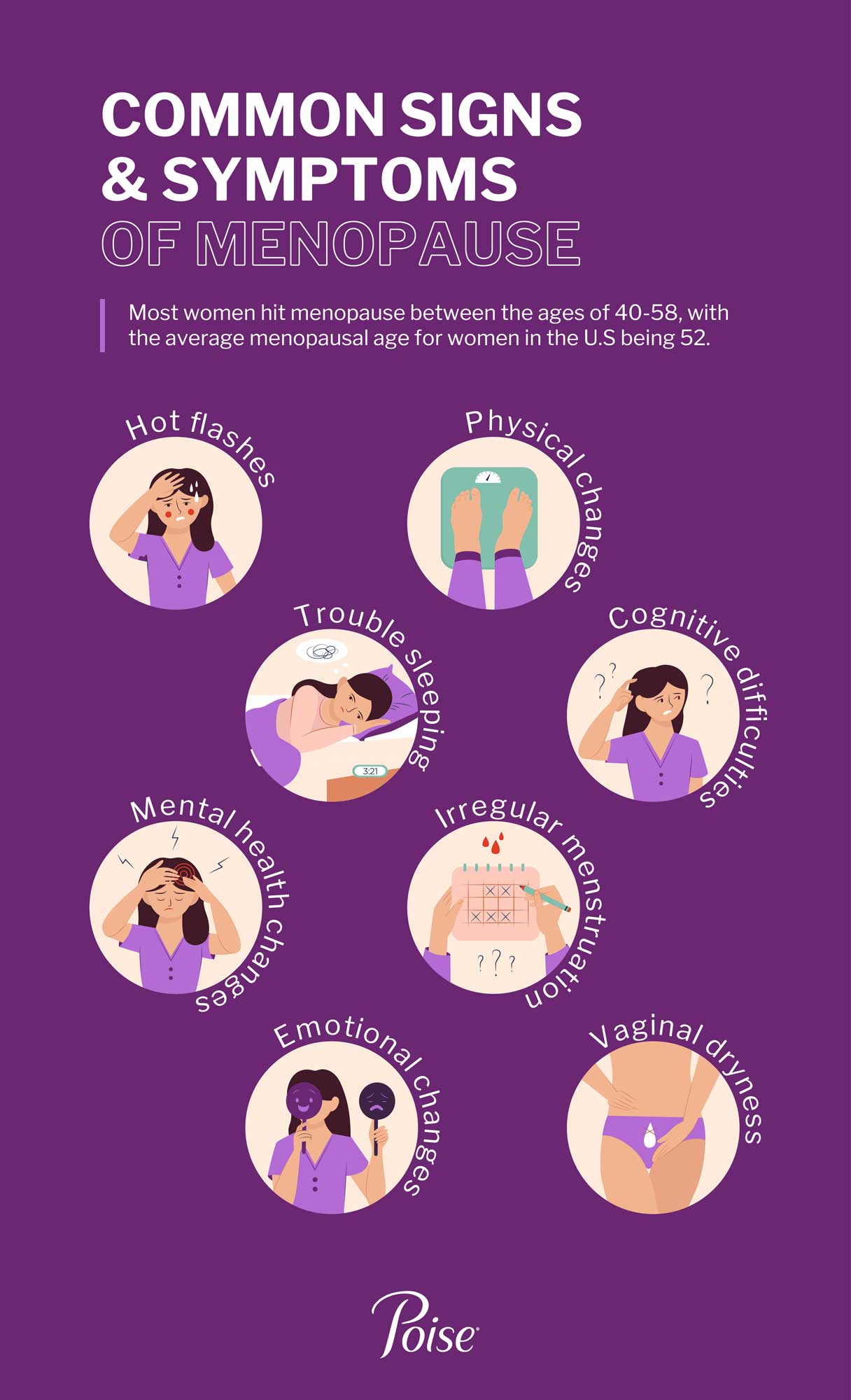
Most women hit menopause – on average - at age 51.
These are the some of the most common menopause symptoms you might experience:
- Irregular menstruation
- Physical changes such as bladder leakage, weight gain, breast tenderness, and changes in hair color and/or texture
- Hot flashes
- Trouble sleeping
- Changes in your mental health
- Emotional changes such as anxiety, depression, low mood
- Cognitive difficulties such as difficulty focusing and concentrating
Reach out to your medical provider should you have any questions or concern about your symptoms.
Using Poise® During Menopause
Adapting to these changes can be challenging, but with the right approach and support system you can manage your menopause symptoms such as bladder leaks.
During this transitional time, find menopause relief from any bladder leakage you’re experiencing with Poise®. Check out our product page to find the absorbency that matches your needs. With one in two women experiencing bladder leakage, it’s important to be feel clean, dry, and fresh with help from Poise®.
Navigating Menopause with Confidence: Support, Solutions, and Poise®
Transitioning to menopause can feel daunting, but it can be manageable. With the support of loved ones and help from your medical provider, you’ll figure out the best menopause relief strategies for you.
Ready to take on menopause with confidence? Discover how Poise® can help if you have bladder leakage during menopause as you embrace this new chapter of your life.