Is My Pelvic Floor Weak?
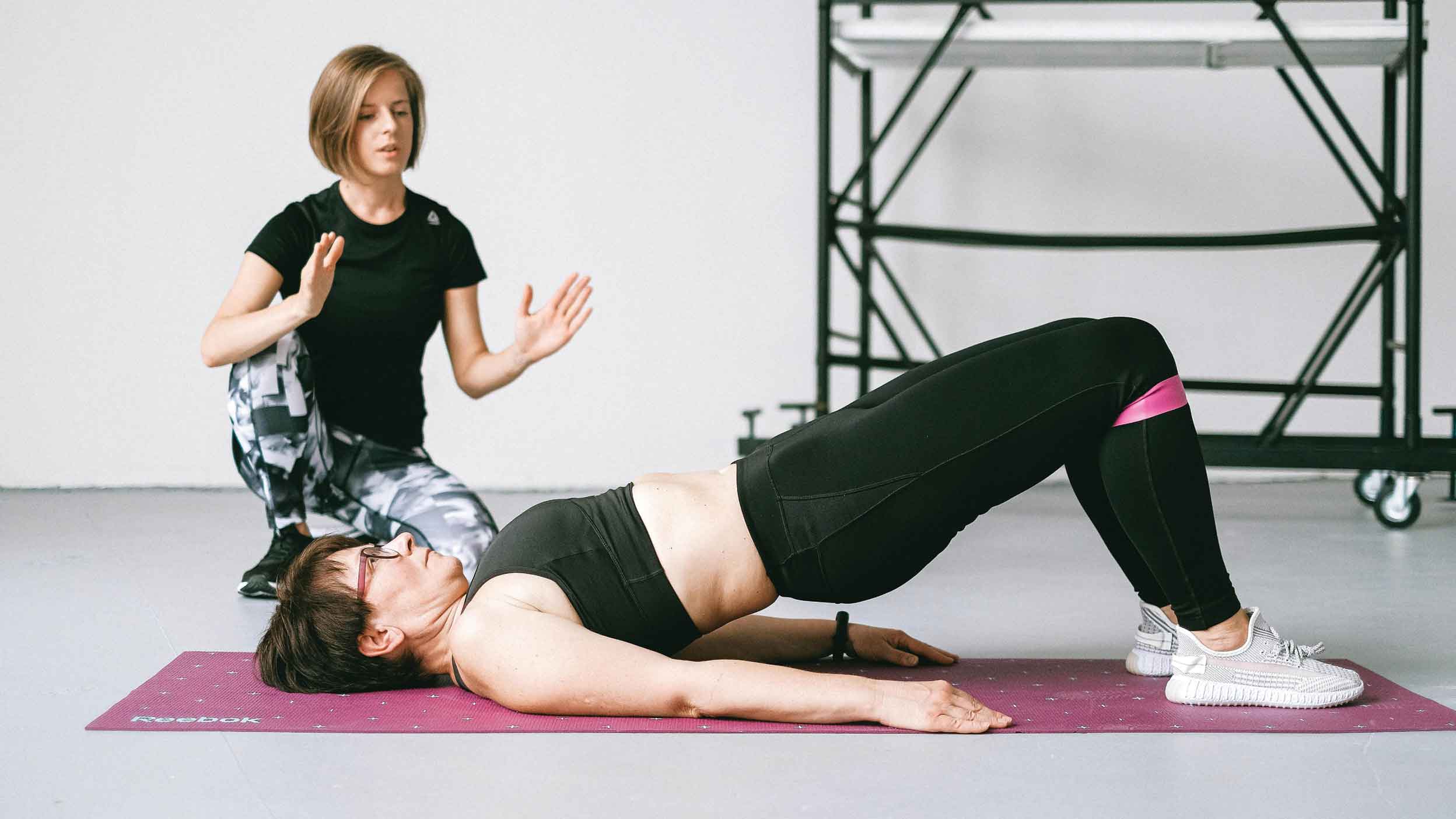
Have you ever laughed or coughed or sneezed and at the same time had some bladder leakage? This might be a sign of a weak pelvic floor. The pelvic floor is a group of muscles that stretches from your pubic bone to the tailbone and supports your pelvic organs: the bladder, urethra, bowel, rectum and anus, vagina, and uterus. Pelvic muscle weakening can happen because of age, injury, childbirth, or medical conditions.
Read on to learn about pelvic floor weakness.
What are some Pelvic Floor Weakness Disorders ?
Some disorders that can occur because of pelvic muscle weakness can be:
Urine Leakage/Incontinence
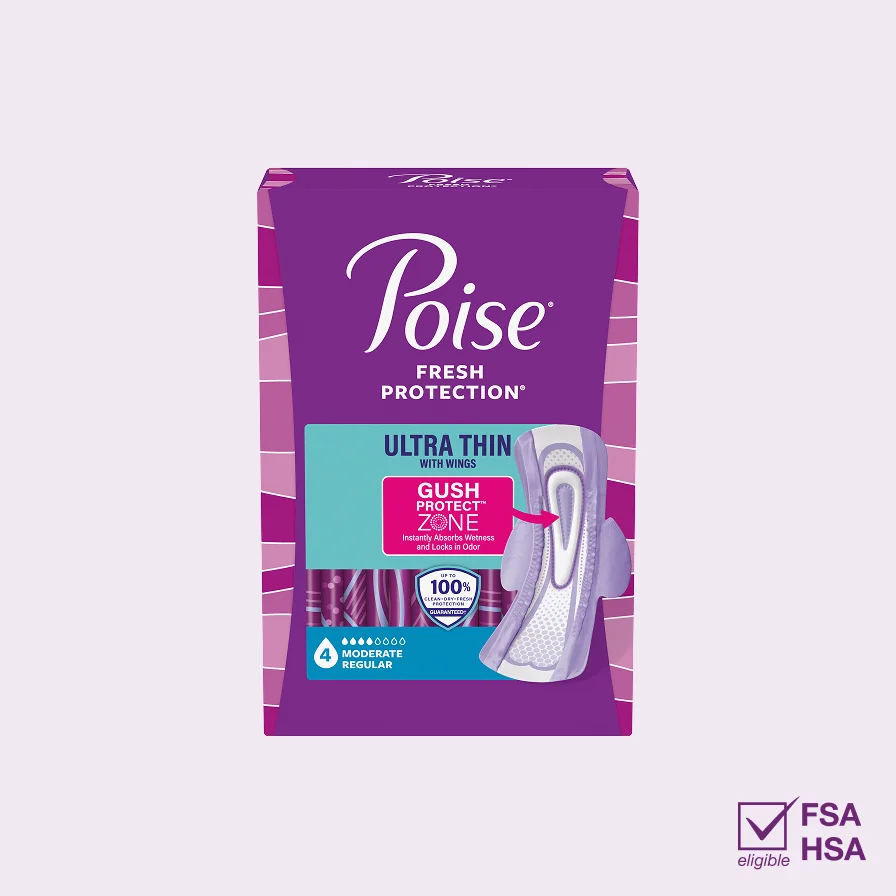
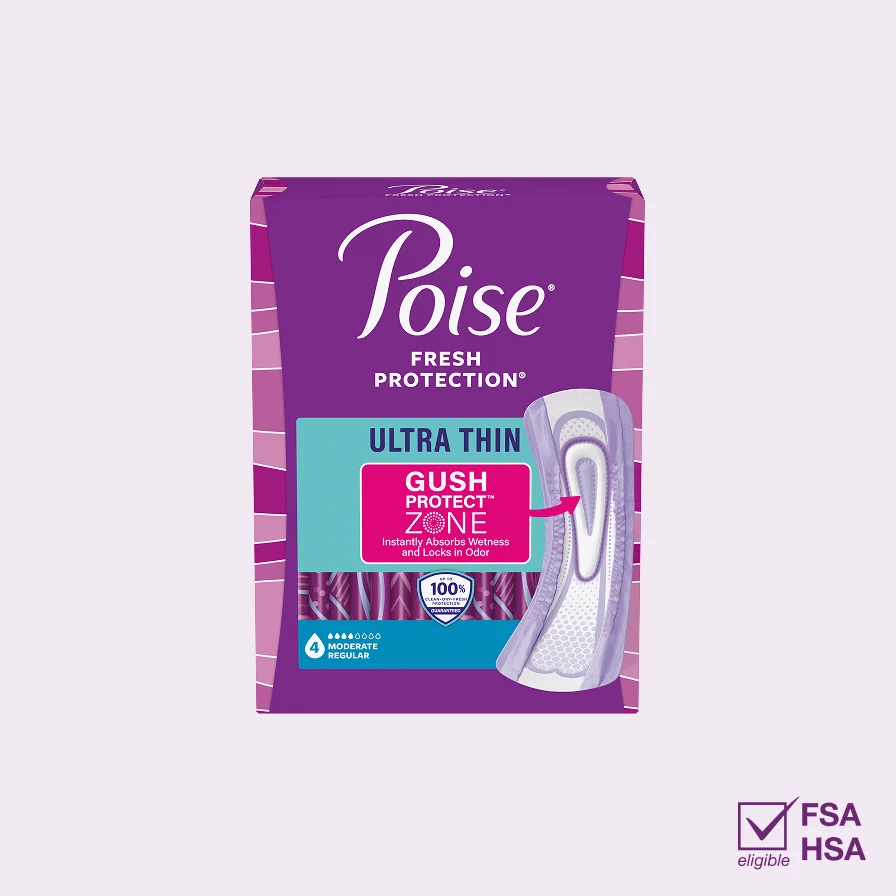
Urinary incontinence is a frequent urge to urinate or being unable to hold the urine and therefore having urine leakage. If you’re worried about accidental leakages, check out our line of Poise® pads and liners. You’ll discover a range of pads, overnight pads, and more, depending on your needs.
Fecal Incontinence
Fecal incontinence is not being able to control bowel movements and therefore having stool leak from your rectum.
Anal Incontinence
Anal incontinence is not able to control passing gas.
Pelvic Pain
Many times, pain feels like a sharp or dull pain in the pelvis area.
Pelvic Organ Prolapse (POP)
Pelvic organ prolapse (POP) is when one or more of your pelvic organs is bulging into your vagina because of a lack of pelvic support due to your weaker muscles.
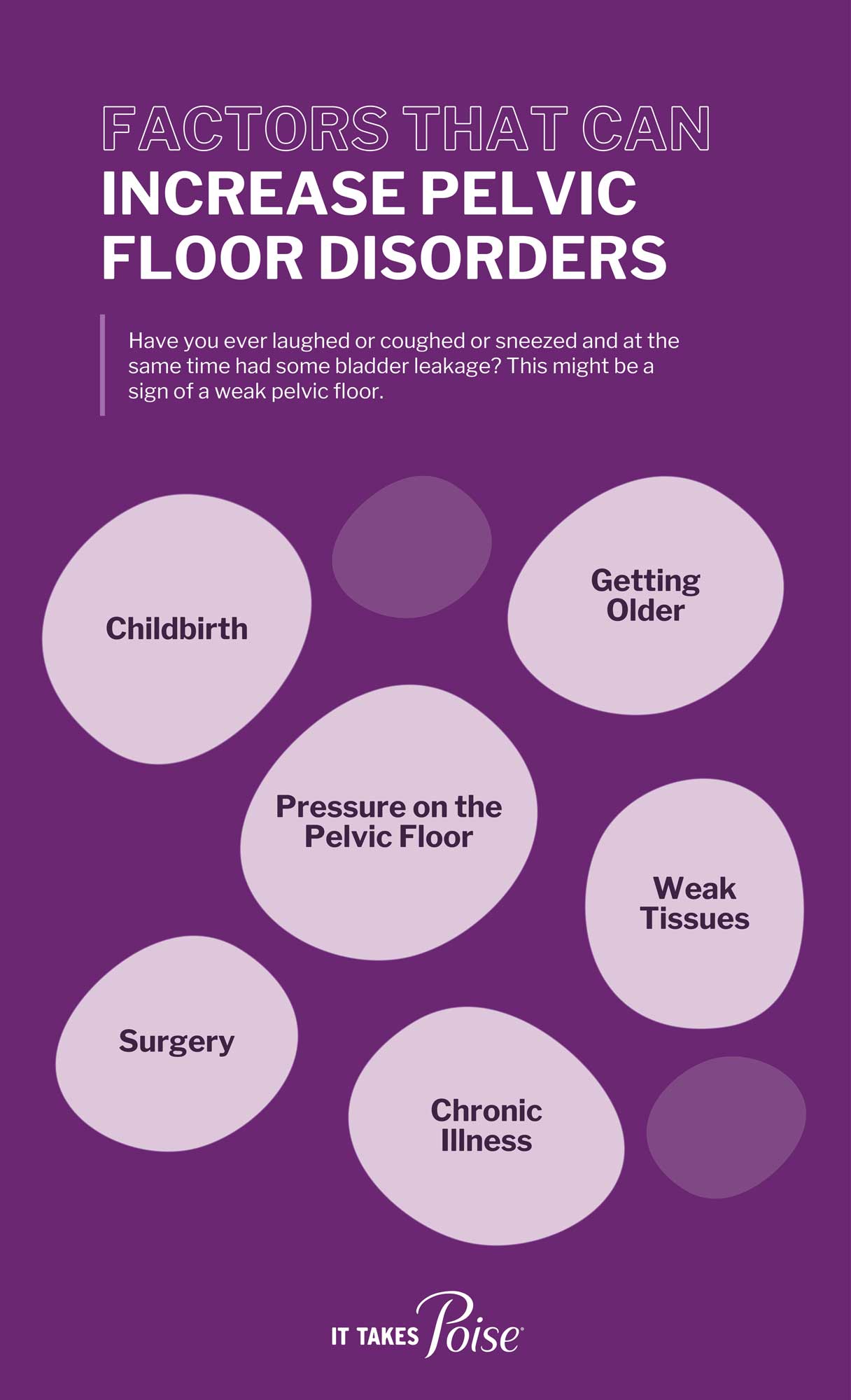
Factors that Can Increase Pelvic Floor Disorders
Childbirth
Pressure on the pelvic floor, such as being overweight or chronic constipation
Getting older: during menopause
Weak tissues: due to genetics
Surgery: such as hysterectomy
Chronic illness: such as diabetes, irritable bowel syndrome, respiratory disease
Ways to Manage a Weak Pelvic Floor
Lifestyle changes may be helpful to manage your symptoms. These may include limiting certain foods and drinks that can stimulate the bladder, eating high fiber foods that may help with constipation, and losing weight. Other treatments may include:
- Kegel exercises
- Bladder training
- Pelvic floor physical therapy
- Prescription medications
- Vaginal pessary
- Surgery
Consult with a Medical Provider
If you are concerned that you may have weakened pelvic floor muscles, you should consult with your medical provider, and they will discuss the appropriate treatment options for you.
Incontinence Products
If you have weak pelvic floor muscles, our bladder leakage products can help you manage any leaks with confidence.
Our daily liners and bladder leak pads will keep you dry, whether you experience a light leakage or need more heavy-duty protection.
With a variety of absorbency levels, our liners and pads keep you clean, comfortable, and fresh. Giving you the confidence to live your life knowing that you’re protected.
Empower Your Knowledge of the Pelvic Floor with Poise®
Don't let weakened pelvic floor muscle impact your life. Add Poise® products into your daily routine.
Recommended Resources
https://www.uclahealth.org/news/article/important-web-muscles-often-goes-overlooked
https://my.clevelandclinic.org/health/body/22729-pelvic-floor-muscles
https://rosannaphysio.com.au/how-to-tell-if-the-pelvic-floor-is-tight-or-weak-and-what-you-can-do-about-it/#:~:text=When%20these%20pelvic%20floor%20muscles,area%2C%20or%20decreased%20sexual%20sensation
https://my.clevelandclinic.org/health/diseases/22870-hypertonic-pelvic-floor
https://cancer.uthscsa.edu/news-and-stories/five-exercises-strengthen-your-pelvic-floor
https://rivercityobgyn.com/signs-your-pelvic-floor-might-be-weak/ d
https://pmc.ncbi.nlm.nih.gov/articles/PMC8766258/#:~:text=Due%20to%20the%20reduction%20in%20estrogen%20and,degeneration%20of%20the%20mucosal%20epithelium%20may%20occur.&text=Low%20estrogen%20may%20be%20the%20cause%20of,support%20both%20the%20pelvis%20and%20the%20PFM
Related Advice & Support




Recommended Products
Absorbency Level
Absorbency Level


